Medical detox versus social detox: understand withdrawal support, when medical monitoring matters, and how compassionate treatment can begin safely today.

A person may appear ready to stop drinking or using drugs, yet their body may not be ready to do so safely without support. That distinction is at the heart of medical detox versus social detox. Both approaches can involve care, encouragement, and a substance-free setting, but they do not provide the same level of clinical oversight. For someone facing dependence, choosing the right level of care can protect their health and create a more stable beginning to recovery.
Detox is not a test of willpower. Withdrawal is a physical and emotional process that can range from uncomfortable to medically dangerous, depending on the substance used, the amount and duration of use, a person’s health history, and whether mental health concerns are also present. A thoughtful assessment helps determine what support is appropriate.
What Is Medical Detox?
Medical detox is withdrawal management provided with clinical supervision. It is designed for people whose symptoms may require medical monitoring, medications, or prompt intervention. Care typically begins with a comprehensive assessment of substance use, physical health, medications, mental health needs, and prior withdrawal experiences.
During medical detox, experienced professionals monitor vital signs, observe symptoms, and help manage withdrawal as safely and comfortably as possible. When clinically appropriate, medications may be used to reduce symptoms, prevent complications, support sleep, ease anxiety, or lessen cravings. The goal is not simply to get through a few difficult days. It is to help the person become physically stable enough to participate meaningfully in ongoing treatment.
Medical detox is often recommended for alcohol, benzodiazepines, and other sedatives because stopping these substances abruptly can lead to serious complications, including seizures, confusion, hallucinations, or dangerous changes in heart rate and blood pressure. Opioid withdrawal is not usually life-threatening on its own, but it can be intensely distressing and may create risks related to dehydration, relapse, or return to use after tolerance has dropped. Stimulants, cannabis, and other substances can also bring significant emotional symptoms, including depression, agitation, insomnia, or suicidal thoughts.
A clinical setting is especially valuable when someone has a history of severe withdrawal, multiple substances in their system, chronic medical conditions, pregnancy, psychiatric concerns, or limited support at home. No two withdrawal experiences are identical, which is why individualized care matters.
What Is Social Detox?
Social detox, sometimes called nonmedical detox or social-model withdrawal support, provides a structured, substance-free environment without the same level of ongoing medical care. The focus is generally on observation, peer support, rest, meals, encouragement, and connection to the next level of treatment.
For a person with mild symptoms, no significant health concerns, and a low risk of complicated withdrawal, social detox may offer a supportive place to begin. The presence of compassionate staff and peers can reduce isolation during a vulnerable time. A calm environment can also give someone space to recognize the impact of substance use and consider what recovery could look like.
Still, social detox has limits. It should not be viewed as a substitute for medical care when medical risks are present. If symptoms intensify, the setting must be able to recognize the concern and arrange a higher level of care quickly. A person should never choose social detox simply because they feel ashamed about needing help or hope to avoid a more thorough assessment.
Medical Detox Versus Social Detox: The Key Difference
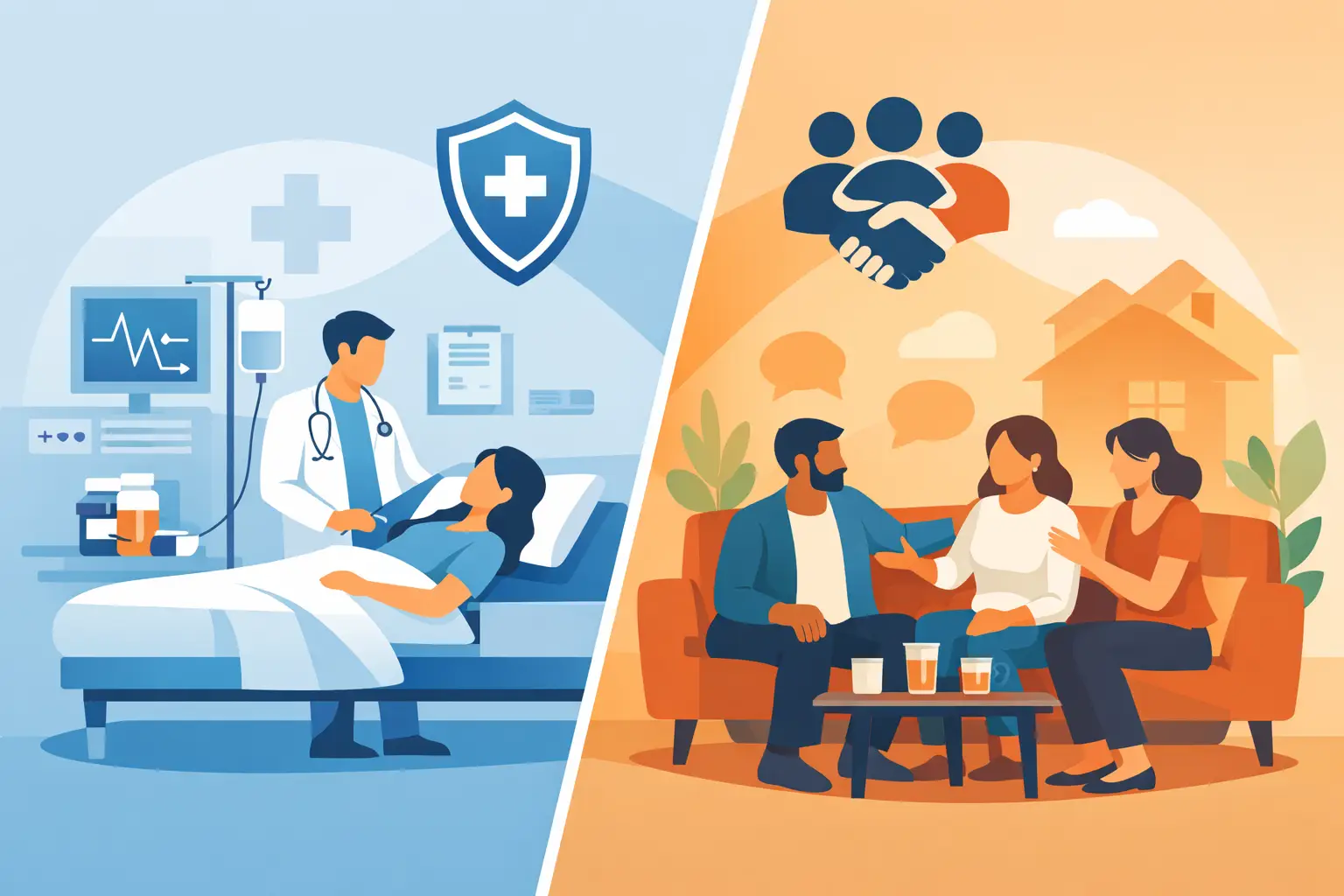
The central difference is the level of medical supervision available during withdrawal. Medical detox provides clinical assessment, monitoring, and treatment for withdrawal-related risks. Social detox provides supportive observation and a recovery-oriented environment, but generally does not offer the same capacity for medication management or medical intervention.
That difference may sound straightforward, but it carries real consequences. Alcohol withdrawal, for example, can begin with shaking, sweating, nausea, anxiety, and trouble sleeping. In some cases, it can progress to seizures or delirium tremens, a severe emergency marked by confusion, agitation, fever, and hallucinations. A person may not be able to predict whether their withdrawal will become severe based on how they feel in the first few hours.
The right choice also depends on more than the drug involved. Someone who has been using alcohol daily may need medical detox, while another person with a different pattern of use may be appropriate for nonmedical support. Prior detox attempts, co-occurring anxiety or depression, trauma history, age, nutrition, and available family support all influence the recommendation.
The safest decision comes from an honest clinical assessment, not from a desire to minimize the problem. Seeking medical help is an act of responsibility and dignity.
Signs That Medical Detox May Be Needed
A professional assessment is always the best way to determine the appropriate level of care. However, medical detox may be particularly important when a person has experienced seizures, hallucinations, delirium, severe vomiting, or dangerous withdrawal symptoms in the past. It may also be indicated for daily or heavy alcohol use, benzodiazepine dependence, use of several substances, serious medical conditions, or active mental health symptoms.
Immediate medical attention is needed for seizures, chest pain, difficulty breathing, severe confusion, fainting, hallucinations, suicidal thoughts, or thoughts of harming someone else. Families should not attempt to manage these symptoms alone at home.
Even when symptoms are not severe, withdrawal can become a turning point. Many people return to substance use not because they lack commitment, but because the discomfort becomes overwhelming and they have no support plan. Professional detox can reduce that suffering while connecting the person to care that addresses the reasons substance use took hold.
Detox Is the Beginning, Not the Whole Treatment Plan
Completing detox can bring relief, but physical stabilization alone rarely creates lasting transformation. Detox clears the immediate hurdle of withdrawal. Recovery asks deeper questions: What triggers use? How can a person respond to stress, grief, conflict, or cravings without substances? What support will be in place after treatment?
A comprehensive residential program can build on detox through individual therapy, group therapy, family involvement, psychiatric support when needed, wellness practices, peer connection, and a 12-step-based recovery foundation. This continuum of care gives clients time to practice new coping skills in a private, structured environment before returning to everyday responsibilities.
At Harlow Gardens, detoxification and residential rehabilitation are approached as connected parts of one personalized plan. Clients receive compassionate clinical support while also having space to restore routines, nourish their bodies, and reconnect with purpose. Comfort and privacy matter, but so does accountability. Recovery becomes more sustainable when a person is not expected to face early change alone.
How Families Can Respond With Care
Families often feel pressure to find an answer immediately, particularly after an overdose scare, a medical crisis, or a painful relapse. It can be tempting to promise that a loved one will detox at home, monitor them closely, or wait until they are “ready.” Yet family love cannot replace clinical assessment during potentially risky withdrawal.
A more helpful response is calm, direct, and compassionate. Encourage an assessment, share specific concerns without blame, and focus on the next safe step rather than demanding a lifetime promise. If your loved one is hesitant, remind them that asking for help does not erase their independence. It gives them a protected place to regain it.
The most meaningful first step is often a simple one: let trained professionals assess the risks, provide the level of support the person truly needs, and help recovery begin with safety, compassion, and a clear path forward.
Book a Consultation
It’s easy and free!