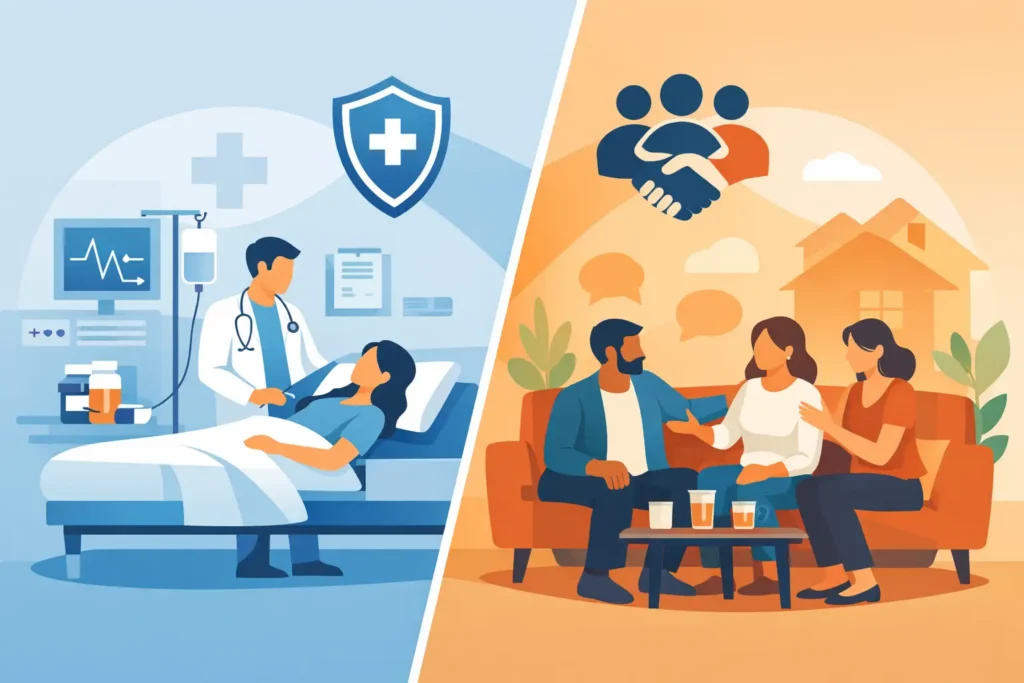
Learn how to choose addiction treatment with compassionate guidance on detox, clinical care, family support, insurance, and planning for lasting recovery now.


The decision to seek help often arrives after a frightening moment: another relapse, a medical scare, a relationship strained beyond recognition, or the quiet realization that life has become organized around alcohol or drugs. Knowing how to choose addiction treatment can bring clarity to an overwhelming time. The right program should offer more than a bed and a schedule. It should provide safe clinical care, genuine compassion, and a clear path toward a life with purpose.
Treatment is not one-size-fits-all. The level of care, therapies, setting, and recovery supports that help one person may not meet another person’s needs. A thoughtful choice begins with an honest look at what is happening now, what safety requires, and what will make lasting change more possible after treatment ends.
Start With Safety and the Right Level of Care
The first question is not simply, “Which rehab is best?” It is, “What level of support is medically and emotionally appropriate right now?” For someone who has been using alcohol, benzodiazepines, opioids, or multiple substances regularly, withdrawal can be uncomfortable, medically complex, and in some cases dangerous. Detoxification with professional monitoring may be the safest starting point.
A quality admissions team should ask about substance-use history, withdrawal experiences, current medications, physical health, mental health symptoms, and immediate safety concerns. This conversation is not meant to judge anyone. It helps determine whether medically supervised detox, residential treatment, outpatient care, or a higher level of psychiatric support is appropriate.
Residential treatment may be especially valuable when use has become difficult to interrupt at home, relapse has followed previous attempts to quit, or the home environment is unstable or triggering. A structured residential setting creates distance from daily pressures and access to consistent support while a person rebuilds routines, insight, and resilience.
If someone is experiencing a possible overdose, severe withdrawal symptoms, thoughts of self-harm, or a psychiatric emergency, seek immediate emergency medical assistance. Treatment planning can follow once immediate safety is addressed.
Look for Evidence-Based, Individualized Care
Effective addiction treatment addresses substance use and the reasons it has become so difficult to stop. Programs should use evidence-based clinical approaches, but the presence of familiar therapy names alone does not guarantee meaningful care. Ask how treatment is individualized after admission and how the clinical team adjusts the plan as a client progresses.
Strong residential programs commonly combine individual therapy, group therapy, psychoeducation, relapse-prevention work, and care for co-occurring behavioral health concerns. Depression, anxiety, trauma, grief, sleep problems, and relationship distress can all influence substance use and recovery. Treating these concerns alongside addiction is not an extra service. For many people, it is central to sustained healing.
It also helps to understand the program’s recovery philosophy. Some people find deep accountability and belonging through a 12-step-based approach. Others may need additional emphasis on trauma-informed care, mental health treatment, or practical coping skills. These approaches do not have to compete. The most thoughtful care plans integrate clinical expertise with a recovery community, helping each person build a foundation they can continue after discharge.
Questions worth asking before admission
When speaking with a treatment center, ask who completes the assessment, how often clients meet individually with a clinician, and how psychiatric needs are evaluated and supported. Ask how the program responds if a client struggles, experiences cravings, or needs a different level of care.
You can also ask how progress is measured. A credible center should be able to describe more than completion of a set number of days. Progress may include improved stability, greater insight into triggers, participation in therapy, healthier communication, a relapse-prevention plan, and readiness for continuing care.
Consider the Environment, Not Just the Amenities
Privacy, comfort, and a peaceful environment can make it easier to focus on recovery. They are not substitutes for clinical quality, but they matter. Early recovery asks a great deal of a person physically and emotionally. A setting that feels safe, respectful, and calm can reduce unnecessary stress and support engagement in treatment.
Look beyond photographs and promises of luxury. Consider whether the environment is structured, whether there is meaningful time for reflection and wellness, and whether clients are treated with dignity. Nutritious meals, movement, restorative activities, and comfortable accommodations can support healing, particularly after the physical strain of active substance use. Still, the real question is whether these features are integrated into comprehensive care rather than used to distract from a thin clinical program.
Community matters, too. Addiction often grows in isolation, even when a person is surrounded by others. Healthy peer connection helps clients practice honesty, receive encouragement, and recognize that recovery is possible. The best programs balance community with confidentiality and individual attention, so no one feels like a number in a large system.
Include Family When It Is Safe and Helpful
Substance use affects entire families, and families often arrive at treatment carrying fear, anger, exhaustion, and unanswered questions. Family therapy or education can help loved ones understand addiction, practice healthier communication, and establish boundaries that support recovery without enabling substance use.
Family involvement should be handled thoughtfully. Not every relationship is safe, and not every client is ready for the same level of participation. Ask how a program determines whether family sessions are appropriate and how it protects a client’s privacy. A respectful program will never force reconciliation. Instead, it creates opportunities for healing when they can be constructive.
For family members, choosing treatment can bring a difficult temptation to control every detail. It is reasonable to ask careful questions and expect transparency. It is also important to remember that recovery belongs to the person receiving care. The goal is to support accountability, not take away agency.
Understand Insurance, Cost, and Admissions Support
Financial questions should be clear from the beginning. Ask whether the center can verify insurance benefits, what portion of care may be covered, and what out-of-pocket costs to expect. If a program accepts PPO insurance plans, confirm the details of the individual policy rather than assuming all services are covered in the same way.
Cost should be considered alongside value and clinical fit. The least expensive option may not provide the level of care someone needs, while a higher price does not automatically mean stronger treatment. Transparency is a meaningful sign of respect. A trustworthy admissions team should explain the process without pressure, answer practical questions directly, and help families understand available options.
Availability also matters when someone is ready to accept help. Motivation can be fragile, especially after a crisis or intervention. A center with responsive admissions support can help turn that moment of willingness into a timely, organized next step.
Choose a Program That Plans for Life After Residential Care
Completing detox or residential treatment is a meaningful beginning, not the finish line. Returning home brings familiar places, relationships, responsibilities, and triggers. Without a plan, the transition can feel abrupt.
Ask specifically how aftercare planning works. Before discharge, clients should have a practical continuing-care plan that may include outpatient therapy, medication management, recovery meetings, alumni connection, sober support, family follow-up, and strategies for high-risk situations. The details depend on the individual, but the plan should be concrete enough to use on a difficult day.
A strong program also helps clients identify what recovery will look like in ordinary life: how they will spend time, manage stress, rebuild trust, protect sleep, and reach out before a lapse becomes a relapse. Lasting transformation is built through these daily choices, supported by connection and accountability.
At Harlow Gardens, comprehensive residential care is designed to honor the physical, emotional, and spiritual dimensions of recovery in a private Palm Springs setting. For adults and families considering treatment, the most useful next step is often a confidential conversation about current needs, safety, and the kind of support that can make recovery feel possible.
Choosing treatment is an act of courage, whether you are making the call for yourself or standing beside someone you love. Look for care that combines clinical excellence with compassion, structure with dignity, and immediate support with a plan for what comes next. The right beginning can help a person move beyond surviving substance use and toward a life they can recognize as their own again.
Book a Consultation
It’s easy and free!