Learn what clinically managed detox is, how it differs from a hospital setting, who it fits, and how Harlow Gardens helps you find the right level of care.
Deciding to stop drinking or using drugs takes courage. The next question is often a practical one: where should withdrawal happen, and what kind of support does this person need? Clinically managed detox is one option. It offers a structured, substance-free setting with continuous staff presence and emotional support. It is not the right fit for everyone, and understanding the difference between care settings can help you or a loved one start in the right place.
Detox is not a test of willpower. Withdrawal is a physical and emotional process that can range from uncomfortable to medically dangerous, depending on the substance used, the amount and duration of use, a person’s health history, and whether mental health concerns are also present. A thoughtful assessment helps determine what support is appropriate.
What Is Clinically Managed Detox?
Clinically managed detox, sometimes called social model detox or clinically managed withdrawal support, focuses on safety, structure, and emotional care during the early days without substances. Rather than relying on hospital equipment or medical procedures, it centers on people: trained staff who are present around the clock, a calm and predictable routine, rest, nourishing meals, hydration, and encouragement through a difficult transition.
At Harlow Gardens, our detox program provides clinically managed withdrawal support. That means continuous staff presence, emotional support, and wellness monitoring, with coordination of care and referrals to licensed medical providers when appropriate, in accordance with our DHCS licensure. Staff pay attention to how a person is feeling and functioning, offer reassurance, and help connect them with outside medical care if their needs go beyond what a clinically managed setting provides.
This kind of setting can ease isolation during a vulnerable time. Many people describe the first days without substances as frightening, restless, and emotionally raw. Having compassionate people nearby, a quiet room, and a clear daily rhythm can make that period feel less overwhelming and create a natural bridge into therapy.
How It Differs From a Hospital or Medically Managed Setting
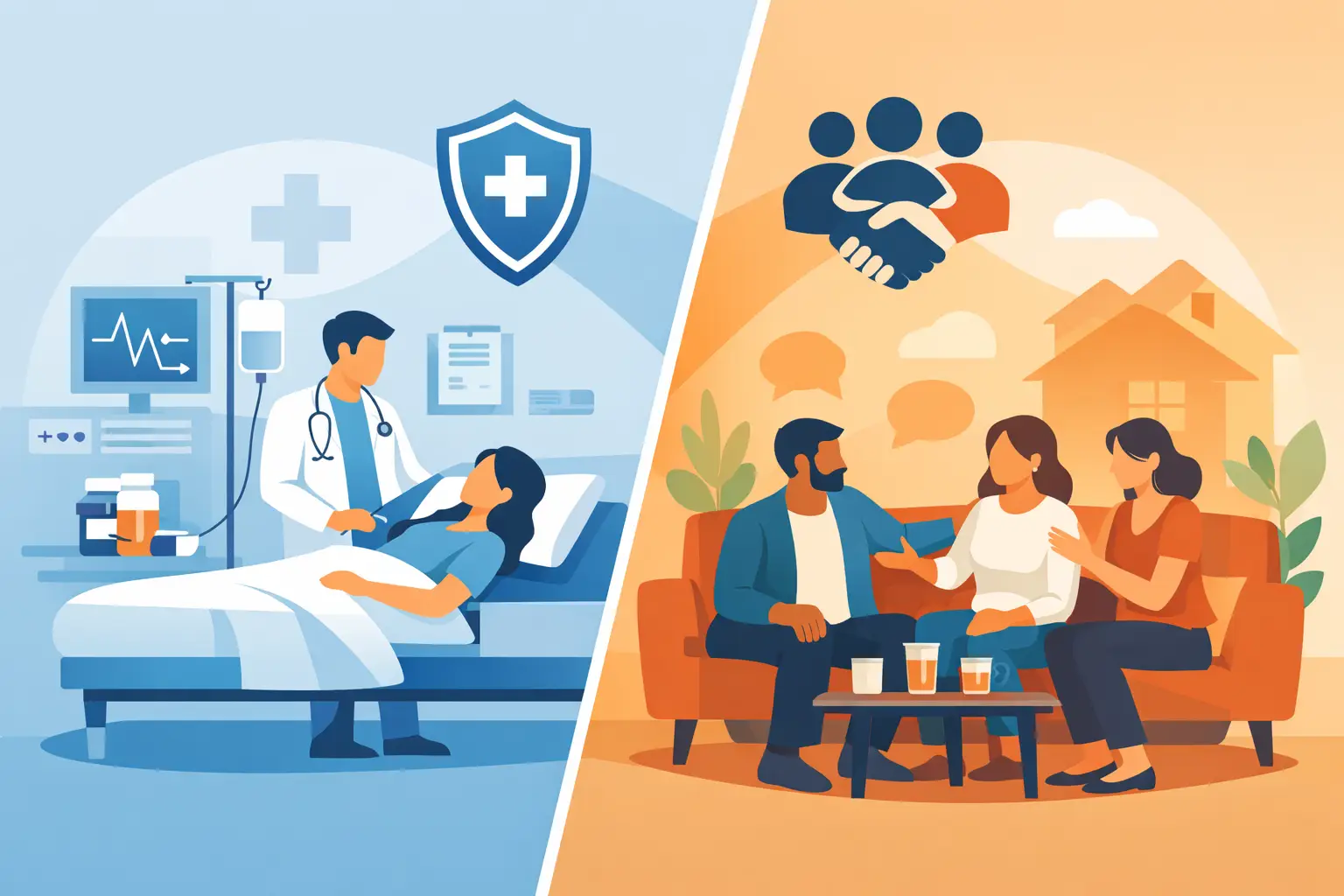
The central difference is the level of medical care available on site. A hospital or medically managed setting has medical staff who can evaluate physical symptoms, order tests, and provide medical treatment for withdrawal complications. A clinically managed program provides supportive care, structure, and observation, and relies on coordination with licensed medical providers outside the program when medical needs arise.
That difference matters because some withdrawal can be dangerous. Alcohol withdrawal, for example, can begin with shaking, sweating, nausea, anxiety, and trouble sleeping. In some cases, it can progress to seizures or delirium tremens, a severe emergency marked by confusion, agitation, fever, and hallucinations. Withdrawal from benzodiazepines and other sedatives can carry similar risks. A person may not be able to predict whether their withdrawal will become severe based on how they feel in the first few hours.
For this reason, no one should stop drinking heavily or stop taking benzodiazepines suddenly without first speaking with a medical professional. Opioid withdrawal is not usually life-threatening on its own, but it can be intensely distressing and may raise the risk of overdose if someone returns to use after their tolerance has dropped. Stimulants, cannabis, and other substances can also bring significant emotional symptoms, including depression, agitation, insomnia, or thoughts of self-harm.
Who Clinically Managed Detox May Fit
A clinically managed setting may be a good fit for someone whose withdrawal risk is lower and whose medical needs are stable. This might include a person with no history of seizures or severe withdrawal, no serious medical conditions that need close medical attention, and a pattern of use that a licensed professional considers appropriate for a supportive, nonhospital setting.
It can also suit someone who needs more than willpower and a quiet room at home. Structure, accountability, and people who understand what early recovery feels like can help a person feel less alone while they prepare to begin treatment. A person should never choose a lower level of care simply because they feel ashamed about needing help or hope to avoid a more thorough assessment.
When a Higher Level of Medical Care Comes First
Some people are at higher medical risk and may need a hospital or medically managed setting before entering a clinically managed program. This can include people who have had seizures, hallucinations, or delirium during past withdrawal, those with daily heavy alcohol use or benzodiazepine dependence, people using several substances at once, and those with serious medical conditions, pregnancy, or an active mental health crisis.
Call 911 or go to the nearest emergency room right away for seizures, chest pain, difficulty breathing, severe confusion, fainting, hallucinations, or thoughts of suicide or harming someone else. Families should not try to manage these symptoms alone at home.
Needing a higher level of care first is not a failure. It is simply the safest starting point for that person, and a residential program can still be the next step once they are medically stable.
Why Assessment Matters
The safest decision comes from an honest assessment, not from a desire to minimize the problem. The right setting depends on more than the substance involved. Prior withdrawal experiences, co-occurring anxiety or depression, trauma history, age, nutrition, current medications, and available family support all shape the recommendation.
When you contact Harlow Gardens, our admissions team asks about these factors and helps determine whether our clinically managed program is an appropriate fit. If a person’s needs call for medical care first, the team coordinates with or refers to licensed medical providers when appropriate. Being open about how much and how often you use, and about any past withdrawal, helps everyone make a safer plan. Your information is handled privately, as described in our notice of privacy practices.
Even when symptoms are not severe, withdrawal can become a turning point. Many people return to substance use not because they lack commitment, but because the discomfort becomes overwhelming and they have no support plan. Supportive detox care can ease that isolation while connecting the person to treatment that addresses the reasons substance use took hold.
The Step Into Residential Care
Completing detox can bring relief, but physical stabilization is only a beginning. Recovery asks deeper questions: What triggers use? How can a person respond to stress, grief, conflict, or cravings without substances? What support will be in place after treatment?
At Harlow Gardens, detox and residential care take place on the same gated, 41-bed campus in downtown Palm Springs, so clients can move into the next phase without changing locations. A residential program builds on detox with an individualized treatment plan that can include individual and group therapy, cognitive behavioral therapy (CBT), dialectical behavior therapy (DBT), trauma-informed care, family therapy, 12-step integration, and holistic wellness practices such as mindfulness, yoga, and sound bath sessions. Aftercare planning begins before discharge so each person leaves with support in place.
Harlow Gardens is licensed by the California Department of Health Care Services (DHCS certification 330244AP), CARF accredited, and LegitScript certified.
How Families Can Respond With Care
Families often feel pressure to find an answer immediately, particularly after an overdose scare, a medical crisis, or a painful relapse. It can be tempting to promise that a loved one will detox at home, watch them closely, or wait until they are “ready.” Yet family love cannot replace a professional assessment during potentially risky withdrawal.
A more helpful response is calm, direct, and compassionate. Encourage an assessment, share specific concerns without blame, and focus on the next safe step rather than demanding a lifetime promise. If your loved one is hesitant, remind them that asking for help does not erase their independence. It gives them a protected place to regain it.
If you are wondering whether clinically managed detox is the right fit, our admissions team is available 24/7 at (760) 933-3883. We accept most PPO plans and offer a free benefits check, so you can understand your coverage before taking the next step.
Book a Consultation
It’s easy and free!